sabato 13 settembre 2014

Boom in Retiring Lab Chimpanzees Fills New Sanctuaries With Apes

As U.S. laboratories phase out the use of chimps, former research subjects fill specially designed facilities

SEPTEMBER 12, 2014

Green Photo Agency - Archive
PHOTOGRAPH BY IACONIANNI FABIO
KEITHVILLE, Louisiana—It's a few minutes before 8 a.m. atChimp Haven, a sanctuary for retired research chimpanzees, and the air fills with their excited hoots and cries. Chimps in an open-air forested enclosure have spotted veterinarian Raven Jackson carrying a caddy packed with their morning's juice treats and frozen bananas. A half-dozen dark-haired chimpanzees crowd the wire metal gate and wait for her to dispense the goodies.

"Hello, Sara Soda," Jackson says to one very large and well-padded female, who opens her mouth wide to swig her juice. "And Rita, you're next," the vet says to the chimpanzee sidled tight against Sara.

Each bottle is filled with a mix of juice and individually tailored vitamins and medicines for the ailments these older chimps suffer, including arthritis and heart disease.
There are youngsters, too, in the lineup. Two-year-old Natalie clings to her mother, Ginger, while seven-year-old Tracy, an orphan, pants excitedly until she's received her juice, then turns and somersaults across the lawn.

These young chimps were born in the sanctuary, but unexpectedly, since the male chimps have all had vasectomies. That's why, for the past two years, the females' frozen bananas have been laced with birth control. Chimp Haven didn't intend to breed more chimps in captivity. Instead, these are meant to be among the last of the chimpanzees owned by the U.S. government.

And unlike their mothers, these youngsters will not be the subjects of laboratory experiments.
For nearly a hundred years, chimpanzees have been used in U.S. laboratories to test new vaccines and medical procedures. Sometimes housed in small, cement cages, many lived most of their lives in isolation. But in recent years, the movement to end invasive research on these animals, humans' closest genetic relatives, has gained force.

This chimpanzee is captive at a primate center
 in Gabon that does HIV and Ebola testing on chimps.
PHOTOGRAPH BY LYNN JOHNSON, NATIONAL GEOGRAPHIC
Now, special sanctuaries, designed specifically for chimpanzees, are opening their doors to these great apes. They're here to serve the chimpanzees who served humankind as subjects of government-funded biomedical research.

And once at a place like Chimp Haven, they can even learn to be chimps again. Chimps socialize with each other here, some for the first time, and are showing that the behaviors of wild chimps can be learned even after years in the laboratory.

"We don't know all the details of their personal histories," says Amy Fultz, a behavioral specialist and co-founder of Chimp Haven. "And we don't know all that they endured. But for many of them it was a harsh life, and when they first came here, their attitude was 'people suck.' That they trust us as much as they do now is phenomenal to me. They are incredibly forgiving."

Retirements "Happening Really Fast"

President Bill Clinton paved the way for sanctuaries like Chimp Haven 14 years ago when he signed the CHIMP Act, which recognized that the government had a surplus of chimpanzees. Some were elderly, in their late 40s and 50s.

The act established a National Chimpanzee Sanctuary System to which government-owned chimpanzees used in federally funded research programs could retire.

At the time, there were about 600 government-owned chimpanzees in research facilities scattered across the country, where they were used primarily for HIV, monoclonal antibody, and hepatitis studies. Another 1,000 chimps were in privately owned research facilities.

Today, about 450 of the government chimps survive, with half living in sanctuaries such as Chimp Haven. Most of the others are waiting to be moved.

Many of these apes had been born in captivity after the National Institutes of Health increased chimpanzee breeding for HIV research in the 1980s; a moratorium was placed on this program in 1995, when scientists discovered that while chimps can be infected with HIV, they do not develop the full-blown symptoms of AIDS, making them a poor model to study the disease. The NIH ended its breeding program entirely in 2012.

Still, to people working to rescue the research chimpanzees, like Sarah Baeckler Davis, the executive director of the North American Primate Sanctuary Alliance, it seemed unlikely in 2000 that most of the NIH's research chimpanzees would now be retired.

"I thought it would take decades," Baeckler Davis said in a telephone interview from her office in Portland, Oregon. "But it's happening really fast now. It's definitely a trend, and the handwriting is on the wall for anyone using chimpanzees in research."

Public sentiment has also turned against using chimpanzees, especially in invasive studies, after decades of studies on the apes revealed their intelligent, emotional natures to be similar to our own.

The efforts to retire the chimpanzees picked up in 2011, when the NIH asked a 12-member committee of scientists from various disciplines to evaluate current and past research projects that used the apes. The committee's report, issued by the prestigious Institute of Medicine, concluded that while chimpanzee research has had medical value, most current projects are not necessary.

Further, the Institute of Medicine report recommended that any future research programs be reviewed to determine if they are a "necessary and appropriate" use of the species—such as ongoing research into monoclonal antibody therapies (now studied as a potential cancer treatment), genetic comparisons, behavioral and cognitive studies, and neuroimaging.

In 1956, a "space monkey,"
 outfitted in pressurized helmet
 and windblast suit,
 was placed in a high-altitude chamber
 as part of research into creating protective clothing for pilots.
PHOTOGRAPH BY BETTMANN, CORBIS
Although chimpanzees might be required for investigating new diseases in the future, "the long-term goal is not to use chimpanzees at all," says James Anderson, a director at NIH, who oversees its chimpanzees and their retirement program.

"It doesn't mean the NIH is eliminating chimpanzee research altogether," stresses Jen Feuerstein, the director of Save the Chimps, a sanctuary in Florida, which also has taken in many of the retirees, including 266 that were privately owned by the Coulston Foundation, a research facility notorious for numerous animal welfare violations. "But the bar for these studies has been set much higher."

Just Being a Chimpanzee

Chimp Haven, which is the only sanctuary authorized to care for NIH chimpanzees harboring infectious diseases, began welcoming the retirees to its 200 acres of pine woods in 2005, and now houses 208.

Of these, 110 arrived just this spring. Some had never seen the sky, or set foot on anything other than concrete; a few had been socially isolated for most of their lives.

Many were infected with HIV or hepatitis viruses, and had endured multiple liver biopsies. Those females who had been in the NIH's breeding program (including the young Tracy's mother) had all of their babies taken from their arms.

"We don't know what they remember about their past lives," says Chimp Haven's Fultz. "But here, they all live in social groups; they have friends, and they get to do basically what they want."

And most of what they want is just to be chimpanzees—palling around with a friend, or putting on loud, energetic displays, or letting a youngster hitch a ride on their backs. On Chimp Haven's grounds, the apes live in a variety of cages and enclosures, including concrete-walled play yards, with climbing platforms, ropes, and swings.

There are also two large forested habitats that are bounded by a moat and fences, and it's in these wooded areas that Fultz has witnessed what she once would have considered most unlikely: former captive chimpanzees climbing to the tops of the pines, or hunting raccoons, or making stick tools to forage for ants, just as apes do in the wild in Africa. Chimps who had been raised in captivity weren't thought to know how to do any of these things; they never had the chance to learn.

"It's our oldest chimpanzees, like Rita, who know how to do all these things," Fultz said.

Rita had been captured in Africa when she was a youngster; her mother and other family members were most likely killed when she was seized. Ultimately, she ended up as one of the U.S. Air Force's breeding chimpanzees for its space program.

A chimpanzee uses a typewriter-like device
 to punch out sentences using symbols for words in a 1973
 experiment at Emory University in Atlanta.
PHOTOGRAPH BY BETTMANN, CORBIS
Some of her offspring may have served in space; no one knows. "But, no, she would not have raised any of her kids," Fultz said.

Rita was also one of the first chimpanzees to arrive at Chimp Haven in 2005. Not long after she had settled in, Fultz spotted her halfway up a pine tree.

"It made such an impression on me," Fultz said. "None of our chimps that were born in captivity knew how to climb trees, or how to fish for ants; they've learned by watching Rita. But she remembered how to do both because she'd done them in Africa with her mother. She hadn't forgotten."

Retirement for Almost All

All but 50 of the NIH-funded chimpanzees are now scheduled for retirement. The institutes are retaining those last few for projects that meet the new standards. There are about 900 other privately owned chimpanzees that are still subjected to medical testing, or used in entertainment, or kept as pets.

It's harder to track what's happening to the privately owned chimps, but the shift away from using these animals in research means that at least some will end up in sanctuaries.

Chimps from all kinds of facilities, private or government, would be readily welcomed at a sanctuary, says Baeckler Davis of the Sanctuary Alliance, which has seven approved retirement centers, including Chimp Haven and Save the Chimps, for the apes.

Here they all live in social groups; they have friends, and they get to do basically what they want.
Yet even these chimps may one day be able to lead a life as free as Rita's: The U.S. Fish and Wildlife Service will soon be announcing its decision on a proposal that all chimpanzees—even those privately owned and in captivity—be listed as endangered.

"We don't know what the effect of this will be," says Baeckler Davis. "But people couldn't do things to chimpanzees that are prohibited under the Endangered Species Act."

If the ruling is enacted, public and privately financed researchers will likely be required to obtain permits for any experiments that harm chimpanzees, and will have to show that their experiments contribute to the survival of chimpanzees in the wild.


Whether chimps are listed as endangered or not, more and more of them can look forward to a home in a sanctuary alongside other chimpanzees, Baeckler Davis says, with plenty of good food, things to do, and choices to make. And above all, the chance at long last to simply be a chimpanzee.


(source: NAT.GEO)

venerdì 12 settembre 2014

Invasive-species control: Bounty hunters

Destructive lionfish are invading coral reefs in the Americas, but fishing competitions can help to keep the problem species in check.

12 September 2014

Pterois volitans - Green Photo Archive
Stephanie Green plunged her hands, sheathed in thick black gloves, into a cooler full of lionfish. Skilfully avoiding its 18 venomous spines, she plucked one out and laid it on a table to record its length. Nearby, volunteers were chopping up the brown, red and white striped fish to make ceviche and passing the dish into the crowd.

As they nibbled on the food, teams of scuba divers milled around the scoring area. They checked out each other’s catches and argued over who would be taking home the more than US$3,500 worth of prizes from the 2013 lionfish hunting derby in Key Largo, Florida.

“At the check-in time it’s a mad rush, with teams coming in with coolers of fish, trying to beat the clock,” says Green, the chief scientist of the contest and a marine ecologist at Oregon State University in Corvallis. By the end of that day last September, Green and the other scorekeepers had counted 707 lionfish, from one smaller than a golf ball to one that stretched nearly two soccer balls long.

The hunting competition is part of an effort to tackle an invasive species that has been identified as one of the world’s greatest conservation issues1. Since lionfish (Pterois volitans) first appeared on the eastern seaboard of the United States in the 1980s, the voracious predators have gobbled up coral-reef fish from North Carolina to Venezuela. Officials responsible for protecting reefs have struggled to find ways to control populations, and managers are embracing these fishing contests in a handful of coastal communities.

The strategy is a bit of a gamble, given that competitions to catch other invasive species — such as pythons in Florida — have had limited success. But the data collected by Green show that even one-day contests can effectively knock down local populations. Her findings and those from other hunting efforts offer lessons on how a little bit of reward money — coupled with science and outreach — can help to keep invasive species in check. “We can’t control lionfish in the entire ocean, but derbies can have high impacts locally,” says James Morris, an ecologist with the US National Oceanic and Atmospheric Administration in Beaufort, North Carolina.

Like many invasions, the lionfish conquest started small. The fish are normally found in the western Pacific Ocean, Indian Ocean and Red Sea, where predators and competitors keep the populations under control. Genetic analysis2 suggests that roughly a dozen fish were first introduced off the Florida coast, either accidentally or intentionally released from aquariums. From there, the population exploded. Lionfish spawn almost continuously, releasing 2 million eggs a year, and they have few predators or competitors in their new home.

“At first people thought they were funny, beautiful,” says Mark Vermeij, a conservation biologist at the Caribbean Marine Biological Institute on the island of Curaçao. But opinions changed as the lionfish took over, he says. “Quite quickly they were everywhere. They were like cockroaches.”

Since they were first spotted near Fort Lauderdale, Florida, in 1985, lionfish have colonized more than 4 million square kilometres — throughout the Caribbean Sea, the Gulf of Mexico and all along the Atlantic coastline of the southern United States — and show no signs of relenting. Marine ecologists worry that the invasion will eventually extend to Uruguay, stopped only by winter water temperatures. It could become one of the most ecologically harmful fish introductions in the western Atlantic, says Mark Hixon, a marine ecologist now at the University of Hawaii at Manoa, and Green’s supervisor at Oregon State. At some sites off the coast of North Carolina and in the Bahamas, the populations are 5–15 times denser than in the fish’s natural range, sometimes even reaching 400 fish per hectare.

The conquest could have profound effects on the biodiversity of coral-reef ecosystems. Lionfish consume whatever fits in their maws — and a lot of it. A DNA analysis3 of the stomach contents of 157 lionfish caught in the Mexican Caribbean identified 43 crustacean and 34 fish species, including parrotfish, French grunt and graysby — important sources of food for local people. Without natural predators, a lionfish can gobble up 79% of the juvenile fish on a reef in as little as five weeks.


Divers lay out their haul from a single-day culling effort intended to drive down lionfish populations around the Cayman Islands.

The feeding frenzy could also lead to larger problems. Some of the fish they prey on clean algae off coral reefs and are already overfished in the Caribbean. Without these essential species, algae could outcompete the corals. Simulations by Jesús Ernesto Arias-Gonzàlez at the Center for Research and Advanced Studies of the National Polytechnic Institute, in Mérida, Mexico, have shown that a lionfish invasion would decrease the biomass of corals in a Caribbean reef by about 10% within ten years4.

Out of control

Green did not set out to study lionfish. She had just started a doctorate in conservation biology when she travelled to the Bahamas in 2008 with her adviser Isabelle Côté, a biologist at Simon Fraser University in Burnaby, Canada. A student they visited was seeing lionfish all over her study sites. “Nobody knew anything about them, the basics of where they were, or what they ate,” says Green.

Green and Côté wondered whether the native fish would return if they removed the lionfish. In December 2009, they staked out 24 patches of reef and arranged for scuba divers to prune the population of lionfish at the sites every month for 18 months. They predicted that the culling effort would need to remove 25–92% of the predators, depending on the site, to keep them from consuming too much of the prey species. By the end of the experiment, the native fish had rebounded by 50–70% in the reefs that reached the targeted level of protection5.

Green and Côté were not the only ones to hunt down lionfish. Earlier that year, the Reef Environmental Education Foundation (REEF) in Key Largo, Florida, had started running derbies in the Bahamas to increase local awareness of the invasion. Green, who had been collaborating with the foundation during her PhD, got involved in planning the first hunts.

She later decided to use the competitions to test whether limited hunts could have an impact. With the help of volunteers outfitted in scuba and snorkels, Green counted lionfish at 60 sites before and after the derbies in Key Largo and the Bahamas in 2012 and 2013. On the basis of a preliminary analysis of the derbies, she says, “there were dramatic drops in the densities of lionfish in the sites where people fish.” After the competitions, lionfish densities were slashed by more than 60% over a 100–150 km2 area compared with pre-derby levels. “It’s like pulling weeds from your garden,” she says. “You’re not going to completely get rid of them, but below a certain level, they won’t cause problems.”

Lionfish recolonized the sites within six months, but the animals were significantly smaller, which helped to reduce pressure on the reef. Smaller lionfish eat less, prey on smaller fish and produce fewer young.

Ted Grosholz, a marine ecologist at the University of California, Davis, says that the data collected by Green and REEF support the idea that derbies can effectively control lionfish populations in selected areas. They also dovetail with results from other lionfish control efforts. When the fish invaded the Dutch Caribbean in 2009, volunteers immediately began to use spear guns to remove lionfish from the island of Bonaire, but did nothing in neighbouring Curaçao. After two years of spearfishing, Vermeij and his colleagues found that the lionfish biomass in the treated areas of Bonaire was just one-third of that in the unfished areas, and about one-quarter of what was seen in Curaçao6.

On Target

The lionfish contests have been much more successful than some other efforts that have used hunters to control invasive species. In 2013, for example, the Florida Fish and Wildlife Conservation Commission organized the first Python Challenge, a month-long event with cash prizes that enlisted professional and amateur hunters to remove Burmese pythons (Python bivittatus). But the pythons proved tough to catch because they are hard to spot in the Florida brush; the hunters caught just 68 snakes from a population that is estimated at 30,000–100,000.

“Quite quickly they were everywhere. They were like cockroaches.”

Jason Goldberg, a biologist at the US Fish and Wildlife Service in Arlington, Virginia, says that derbies could be improved by incorporating the results of research. Organizers need to calculate how many individuals to remove, whether it is better to cull older or larger individuals and how their density affects the health of the population. That information can then be used to set hunting targets  — and prevent the kinds of problems that arose when Australia culled red foxes (Vulpes vulpes). The 2002–03 Victorian Fox Bounty Trial removed one-fifth of the state’s red foxes but ended up boosting the population because the survivors thrived when they had less competition for food7.

Cash incentives can help by drawing amateurs into efforts to control invasives. In the Pacific 
northwest, for example, anglers are offered $4–8 for every northern pike minnow (Ptychocheilus oregonensis) they capture to deter the fish from preying on young salmon. The programme has removed more than 3.9 million fish and slashed predation by 40%.

Goldberg says that research on lionfish derbies should offer insight into how often — and when — they should take place at each location. He adds that new steps might be needed, such as encouraging commercial fishing of lionfish to make the species more common in restaurants.

The lionfish invasion and the success of the derbies has led to policy changes in Florida. In August, wildlife regulators relaxed hunting restrictions in the state to allow divers wearing rebreathers — devices that allow them to remain in the water for longer — to harvest lionfish. It will also now allow derby participants to spear lionfish in areas where spearfishing is otherwise prohibited. “For marine protected areas to function as conservation areas, it’s important that the biology and ecology be conserved to the highest level possible, and that now requires lionfish control,” says Morris.


With her results pointing in a positive direction, Green intends to continue analysing data from lionfish derbies, including an event in Key Largo on 13 September. When she shares her research findings with the divers, it tends to fire them up, she says. “There’s this good community feeling at the derbies that this is a tool that can have a positive effect and help to suppress the invasion.”


(source: NAT.COM)

Fotocellule per individuare orso in area protetta Lazio

In monti Parco Simbruini verifiche dopo avvistamenti Marsicano

12 settembre 2014


Green Photo Archive
Fotocellule per individuare l'orso marsicano sui monti del parco dei Simbruini, la più estesa area protetta del Lazio. Le ha posizionate il personale dell'ente montano per cercare di capire i movimenti dell'animale e stabilire se si tratti di un esemplare maschio o femmina dopo i recenti avvistamenti, quattro in tre mesi. Le fotocellule in grado di segnalare la presenza dell'orso sono state messe su diversi tracciati, quelli che l'esemplare marsicano potrebbe ripercorrere durante i suoi spostamenti. Il personale del Parco ha raccolto anche diversi reperti, come peli del manto, lasciati dall'animale durante l'incursione in un apiario tra Monte Livata e Cervara, distrutto dall'azione del mammifero. Ora tutta la zona dell'oasi ecologia tra le province di Roma e Frosinone è interessata da un continuo monitoraggio. Intanto a Filettino, paese che ricade nel parco dei Simbruini ma in Ciociaria, si punta a istituire un'area faunistica per ospitare l'orso marsicano. Il progetto presentato dal sindaco Paolo De Meis è già all'esame dell'ente Parco.  


(source: ANSA)

Eseguita autopsia Daniza, risultati tra qualche giorno

Lav chiede sequestro del corpo

12 settembre 2014


I risultati dell'autopsia di Daniza saranno disponibili solo tra qualche giorno. Lo comunica la Provincia autonoma di Trento che ha disposto l'esame autoptico dell'orsa morta nella fase di cattura, che è stato eseguito - precisa una nota - da un istituto indipendente alla presenza delle autorità giudiziarie competenti. Riguardo ad un presunto stress subito dall'orsa a causa delle operazioni di cattura, la Provincia sottolinea che "non è mai stato messo in atto alcun tipo di inseguimento. Daniza era infatti monitorata a distanza e si sono attese le condizioni più sicure per agire senza che si siano condizionati i suoi spostamenti". Questa mattina la Lega antivivisezione aveva depositato in Procura a Trento un'istanza di sequestro probatorio del corpo di Daniza chiedendo di far eseguire subito l'autopsia all'Istituto forense di medicina veterinaria del ministero della Salute. "Il piccolo laboratorio dell'Istituto zooprofilattico di Trento - sottolinea la Lav - è una struttura che approfondisce gli aspetti dell'allevamento, le patologie dei ruminanti, le tecniche di trasformazione del latte e di stagionatura del formaggio, tutti aspetti ben lontani dalle competenze e dalla indipendenza necessaria per eseguire un esame autoptico sul cadavere di un'orsa uccisa per telenarcosi".  


(source: ANSA)

Orrori e violenze in laboratori per vivisezione scimmie

Lav, esperimenti agghiaccianti in Germania ma anche in Italia

12 settembre 2014


Sono agghiaccianti gli esperimenti subiti dai macachi detenuti nei laboratori: lo rivela una recente scoperta fatta nell'Istituto tedesco di Tübingen, il Max Planck Institute for Biological Cybernetics, grazie all'Associazione britannica contro la vivisezione-BUAV, in collaborazione con la Soko Tierschutz. Ma gli "orrori" e le "violenze inaudite" sulle scimmie riguardano anche l'Italia, in particolare l'università di Modena, dove le scimmie vengono vivisezionate con procedure "non solo eticamente inaccettabili, ma scientificamente non ammissibili". Lo denuncia la Lav-Lega Antivivisezione, che ha diffuso l'investigazione. "Le scimmie, oggetto di ricerche di base al cervello - fa sapere la Lav - subiscono gravi deprivazioni e coercizioni fisiche con impianti nel cranio e immobilizzazioni in strutture di contenzione. I macachi subiscono la mancanza di acqua per giorni e sono così assetate da bere l'urina delle altre scimmie, inoltre le strutture di contenzione comportano elevati livelli di dolore dove gli animali terrorizzati rimangono immobilizzati dalla testa in giù con impianti elettrici nel cervello e negli occhi, che registrano le attività mentali con evidenti segni di dolore". La vivisezione esiste, rileva la Lav, ed è (ancora) legale: "è assurdo continuare a pubblicizzare la sperimentazione animale come una procedura poco invasiva dove gli animali non soffrono, perché non corrisponde alla realtà e alla verità". "Non illudiamoci che questi esperimenti non avvengano in Italia! - afferma Michela Kuan, biologa, responsabile LAV Vivisezione - Purtroppo molte scimmie trovano la morte nei nostri laboratori: anche qui si effettuano esperimenti che assomigliano alle stanze degli orrori, come nel caso dell'Università di Modena, oggetto di contestazioni da mesi, dove sotto il termine "ricerca di base" vengono inserite delle viti sotto la congiuntiva oculare, fili d'acciaio nei muscoli della nuca e camere di registrazione nel cervello. E' ora di smettere di giustificare dolore e violenze, in nome di una pseudo-scienza che non cura alcun malato".  


(source: ANSA)

Orso trovato morto nelle campagne dell'aquilano

E' un maschio, forse è stato avvelenato

12 settembre 2014


La carcassa di un orso è stata ritrovata nelle campagne di Pettorano sul Gizio. Sul posto i veterinari del Parco d'Abruzzo, Lazio e Molise e i responsabili della Riserva Monte Genzana, che stanno procedendo a una prima ricognizione per stabilire le cause del decesso. "Stiamo verificando l'identità dell'animale", ha detto il direttore del Parco, Dario Febbo. Proprio ieri nella stessa zona era stato segnalato un orso che era entrato in un pollaio dove era stato sorpreso dall'allevatore, che, per allontanarsi dall'animale, aveva sbattuto alla testa, perdendo i sensi.

Dopo i primi accertamenti sembra che l'orso sarebbe stato avvelenato l'orso ritrovato vicino ad una stradina ciclabile nelle campagne di Pettorano, a poche centinaia di metri dalla frazione di Valle Larga. Sarebbero evidenti i segni di questa prima ipotesi fatta dal Corpo Forestale che sta effettuando i rilievi sulla carcassa. L'orso non è stato ancora identificato, anche se pare sia un maschio e non l'orsa che era stata ripetutamente avvistata nei giorni scorsi nella zona. Sul posto sono arrivati anche i veterinari del Parco nazionale d'Abruzzo e i tecnici che stanno procedendo alle necessarie operazioni prima di trasferire la carcassa in un centro specializzato. A ritrovare la carcassa dell'orso è stato un giovane del posto che transitava in bicicletta.  


(source: ANSA)

Sette capodogli arenati sulla spiaggia a Vasto, 4 morti

Il ministro dell'Ambiente segue le operazioni

12 settembre 2014

Già quattro dei sette capodogli arenatisi questa mattina sulla spiaggia di Vasto, nella riserva di Punta Penna, non ce l'hanno fatta. Oltre ai due già accertati da subito, se ne sono aggiunti altri due. Si sta cercando con ogni mezzo a mantenere in vita i restanti tre. A darne notizia è Vincenzo Olivieri, presidente nazionale del Centro studi cetacei onlus, sul posto insieme a volontari dell' associazione. I cetacei hanno una lunghezza tra gli 11 e i 12 metri dal peso di circa 11 tonnellate ciascuno ed erano stati avvistati stamani da alcuni surfisti che hanno avvertito la Capitaneria di Porto.

Immediate le procedure di emergenza. Sul posto ci sono i veterinari della Asl provinciale di Chieti. I cetacei erano seguiti da qualche giorno nell'Adriatico dopo essere stati avvistati per la prima volta in Croazia.

Il ministro Galletti segue le operazioni

Il ministro dell'ambiente Gian Luca Galletti è stato informato stamattina dello spiaggiamento dei sette capodogli a Punta Penna presso Vasto ed è in costante contatto con il Reparto Marino Ambientale della Guardia Costiera, che sta coordinando le operazioni per cercare di salvare i cetacei. Lo rende noto il dicastero. Sul posto, spiega la nota, sono operative le unità della guardia costiera Pescara e Ortona, il nucleo subacqueo della guardia costiera di San Benedetto del Tronto, e i volontari protezione civile. Si sta recando sul posto l'Unità Speciale dell'Università di Padova diretta dal professor Mazzariol, che opera in convenzione con il Ministero dell'Ambiente proprio per i casi di spiaggiamento dei cetacei. Sono state inoltre allertate la "Banca Tessuti per Mammiferi", diretta dal professor Cozzi dell'Università di Padova, la direzione generale per la sanità animale del Ministero della Salute e gli "Istituti Zooprofilattici Sperimentali", coordinati dalla dottoressa Casalone.

Capitaneria Porto,stiamo facendo possibile 

"Stiamo facendo il possibile per salvarli, ma come potete comprendere non è un'operazione semplice. Abbiamo delineato l'area con un cordone di sicurezza, perché i cetacei devono essere mantenuti calmi senza subire ulteriori stress". Lo ha dichiarato il comandante della Capitaneria di Porto di Vasto, Tenente di Vascello Giuliano D'Urso in relazione allo spiaggiamento di sette capodogli, di cui due sarebbero già morti. I veterinari della Asl provinciale di Chieti stanno coordinando l'intervento con gli uomini della Capitaneria del porto. Sul posto anche il presidente del Centro Studi Cetacei onlus d'Abruzzo Vincenzo Olivieri. Allertati anche il Centro nazionale emergenza cetacei di Padova e il Comando generale delle Capitanerie di Porto, sezione Ambiente Marino presso il Ministero dell'Ambiente. Nel frattempo, da San Benedetto del Tronto (Ascoli Piceno), è in arrivo il gruppo sommozzatori della Guardia Costiera. 

Sindaco Vasto, è il disastro più grave di sempre

"È uno dei disastri ambientali più pesanti di questa regione". Sono le prime dichiarazioni del sindaco di Vasto, Luciano Lapenna, dopo lo spiaggiamento a Punta Penna di sette capodogli. "Abbiamo attivato tutte le procedure ed è stata predisposta presso il nostro municipio un'unità di crisi per seguire l'evolversi della situazione". Il sindaco sta aggiornando costantemente la Prefettura di Chieti.


(source: ANSA)

Ambiente, aumenta strato di ozono

È la prima volta in 35 anni.

11 settembre 2014

Scienziati ottimisti: confermato un aumento significativo e prolungato di molecole di ozono nella stratosfera. Ma lo strato è ancora più sottile del 6% rispetto agli anni ‘80
Le condizioni del buco dell’ozonosembrano andare verso un miglioramento ma c’è ancora molto lavoro da fare. Secondo un nuovo rapporto di una commissione scientifica del Programma delle Nazioni unite per l’ambiente (Unep) e dell’Organizzazione meteorologica mondiale (Omm), lo strato di ozono sta iniziando a ricostituirsi, soprattutto grazie alla graduale eliminazione a partire dagli anni Ottanta di alcune sostanze chimiche usate in frigoriferi e aerosol.

Lo schermo
Lo strato di ozono è la parte dell’atmosfera in cui si concentra la maggior parte dell’ozono, che costituisce uno schermo e ci protegge dalle radiazioni solari pericolose per la vita sulla terra. Con l’espressione buco dell’ozono si intende invece una significativa riduzione di questo gas nelle regioni polari terrestri, ossia un assottigliamento marcato dello strato. La completa ricostituzione dell’ozonosfera resta però un obiettivo distante. Le sostanze che distruggono l’ozono sono ancora presenti nell’atmosferae ogni anno creano un buco dell’ozono sopra le zone polari. Inoltre, lo strato di ozono è ancora di circa il 6% più sottile che negli anni Ottanta. Ciononostante gli scienziati sembrano ottimisti: per la prima volta in 35 anni, infatti, è stato confermato un aumento statisticamente significativo e prolungato di molecole di ozono nella stratosfera.

I miglioramenti

Tra il 2000 e il 2013 il livello di ozono è salito del 4% alle latitudini medio-settentrionali all’altezza di circa 48 chilometri, ha riferito Paul A. Newman, uno scienziato della Nasa a capo dei 300 ricercatori autori del rapporto. Si tratta del primo da quattro anni a questa parte. «È una vittoria per la diplomazia e per la scienza», ha commentato il chimico messicano Mario Molina. Nel 1974 Molina e F. Sherwood Rowlan scrissero uno studio scientifico in cui avevano previsto il problema della riduzione dello strato di ozono e nel 1995 vinsero il premio Nobel per la chimica per il loro lavoro. Lo strato di ozono aveva iniziato ad assottigliarsi a partire dagli anni Settanta a causa della presenza nell’atmosfera di sostanze prodotte dall’uomo note come clorofluorocarburi (Cfc), che distruggono le molecole di gas nell’aria. A seguito dell’allarme lanciato dagli scienziati, tutti i Paesi del mondo siglarono nel 1987 un trattato con cui furono vietati i Cfc.


(source: CdS)

Acidificazione oceani ruba a squali capacità percepire odori

Compromessa abilità tracciamento cibo per palombi

12 settembre 2014


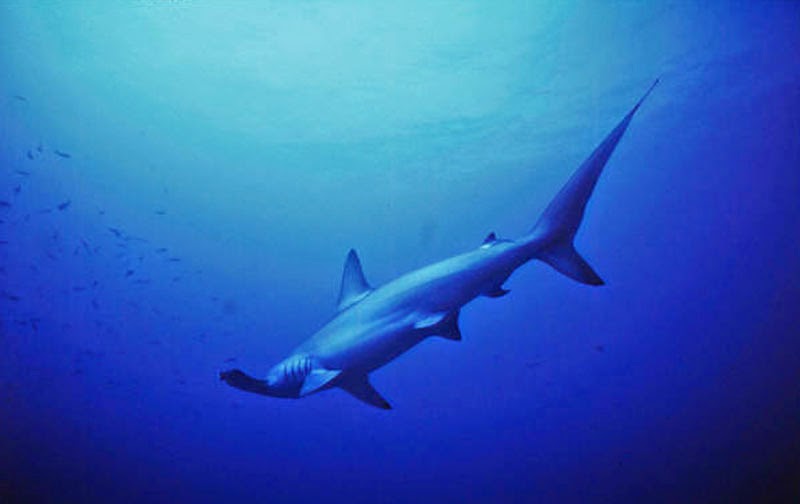
L'acidificazione degli oceani "ruba" agli squali la capacità di percepire l'odore del cibo. Una nuova ricerca pubblicata sulla rivista Global Change Biology rivela come gli elevati livelli di anidride carbonica nei mari compromettano l'abilità di tracciamento delle prede dei palombi.

Lo studio ha analizzato per la prima volta la capacità degli squali di percepire l'odore del cibo in condizioni che simulano i livelli di acidità attesi negli oceani alla fine del secolo. Analizzando 24 squali in un canale artificiale trattato con anidride carbonica all'interno del Woods Hole Oceanographic Institute a Cape Cod in Massachusetts, l'equipe di ricerca ha scoperto che gli esemplari tendono ed evitare di andare verso l'odore di calamaro che è stato pompato nell'acqua. Un comportamento questo che dimostra secondo gli scienziati, come l'acidificazione degli oceani danneggi le funzioni sensoriali alternando il comportamento degli organismi acquatici.

Il processo appare "chiaro": l'anidride carbonica rilasciata nell'atmosfera viene assorbita nelle acque oceaniche, dove si scioglie e abbassa il pH dell'acqua. Le acque acide influenzano così il comportamento dei pesci interrompendo un recettore specifico del sistema nervoso, chiamato Gabaa, che è presente in molti organismi marini che possiedono un sistema nervoso, tra cui gli squali.  

(source: ANSA)

giovedì 11 settembre 2014

Morta orsa: Enpa, ministro Galletti si dimetta

Chiesto il sequestro del corpo del plantigrado per l'autopsia

11 settembre 2014

Greenphoto Archive
"Ciò che è accaduto all'orsa Daniza non è un incidente né un fatto casuale: è un animalicidio in pieno regola. Nei giorni e nelle settimane passate avevamo più volte chiesto di lasciare in pace l'animale, arrivando a diffidare le autorità locali: questo è il risultato della caccia alle streghe, del clima di terrore scatenato contro il povero plantigrado". Lo dichiara la presidente dell'Ente nazionale protezione animali (Enpa), Carla Rocchi, che preannuncia una mobilitazione legale da parte dell'associazione. "Insieme alle centinaia di migliaia di cittadini che si sono schierati con noi a difesa di Daniza - prosegue Rocchi - consideriamo responsabili di questa morte tutte le autorità che hanno fatto del terrorismo psicologico contro l'orso: in primis la Provincia di Trento e gli amministratori locali ed i politici locali che hanno scatenato questa guerra di religione. Ma anche coloro i quali hanno materialmente eseguito l'intervento di telenarcosi. Al riguardo chiediamo di sapere se tale intervento sia stato posto in essere da personale medico-veterinario e se siano state rispettate tutti i protocolli veterinari". Inoltre, l'Enpa si chiede quale ruolo abbia giocato il ministero dell'Ambiente in questa vicenda "visto che si è dimostrato incapace di tutelare l'animale". Per questo l'associazione chiede le dimissioni immediate del ministro. "Chi a vario titolo è coinvolto nell'animalicidio di Daniza stia sicuro di non dormire sonni tranquilli - aggiunge la presidente dell'Enpa - questo per noi e per tutti i cittadini italiani che hanno preso a cuore il caso dell'orsa è il punto di partenza di una battaglia che porteremo avanti finché Daniza non avrà giustizia".
L'Enpa ha anche richiesto al servizio Cites (Convenzione di Washington sul commercio internazionale delle specie di fauna e flora minacciate di estinzione) del Corpo Forestale dello stato e alla Procura "di porre sotto sequestro il corpo della povera Daniza ed affidarlo all'Istituto zooprofilattico nel quale siano presenti veterinari esperti in medicina forense e di animali selvatici, affinché, visto come sono andate le cose, venga eseguito un esame necroscopico affidabile e oggettivo". L'Ente nazionale protezione animali in una nota rileva che "considerata la gravità dell'accaduto, è fondamentale che si faccia chiarezza sulle cause del decesso e che si stabilisca, al di là di ogni ragionevole dubbio, se il plantigrado sia effettivamente morto a causa dell'intervento di telenarcosi, per dose sbagliata o luogo di inoculazione sbagliata. Se tale ipotesi dovesse essere confermata, occorre anche chiarire se tale intervento sia stato eseguito seguendo i protocolli farmacologici idonei e se sia stato posto in essere da personale medico-veterinario".

(source: ANSA)


Demand for agricultural products drives 'shock' tree loss in tropical forests

11 September 2014

Degraded lands like these in Indonesia are often the result of illegal clearances  


Around five football fields of tropical forest have been illegally cleared every minute between 2000 and 2012 according to a new report.

The authors say that consumer demand in Europe and the US for beef, leather and timber is driving these losses.

The vast majority of this illegal deforestation for commercial agriculture took place in Brazil and Indonesia.

The authors say the practice is spreading rapidly in Asia and Africa.

The research has been carried out by Forest Trends, a US based, non-governmental organisation that includes environmentalists, industry and the financial sector.

Their report focuses on the question of illegality. While the cutting down of tropical forests has been an issue of global concern for several decades, knowing what's legal and illegal has been much more difficult to ascertain.

This new study argues that in the first 12 years of this century, 49% of tropical deforestation was due to illegal conversion for commercial agriculture.

The authors say consumer demand in the EU and elsewhere for agricultural commodities is the main driver for these clearances that have seen more than 200,000 sq km of forest laid bare.

The report values this trade in commodities including timber, leather, beef, soy and palm oil at $61bn a year.

"I think it will come as a shock to a lot of people, even to people who work on deforestation," lead author Sam Lawson told BBC News.

"People are often blind to the illegalities or don't see them for what they are in terms of the scale."

Deadly consequences

Much of these forest clearances are illegal, but governments don't have the capacity to enforce their own law. Licences and permits to cut the trees are often acquired through corruption.

This can have significant, sometimes deadly implications for the indigenous communities that live in these forests.

In recent days in Peru, four indigenous campaigners were murdered for their opposition to illegal land clearances.

In Brazil, where large amounts of this type of deforestation have taken place, the authorities aremaking strenuous efforts to tackle the problem.

One reason they have had success is they have started to hit the corporations involved, in their pockets - blocking access to credit for example, for companies involved in illegal clearing.

The authors believe that consumer countries like the European Union could be doing much more to tackle the problem.

"At the moment EU is giving large amounts of money to these tropical countries to reduce deforestation while at the same time it is shooting itself in the foot by importing all these dodgy products from illegal clearances," said Sam Lawson.

"It needs to close that vicious circle, it needs to stop importing these products as a first step."

The research team believe that the example of tropical timber could be a role model for tackling beef, leather and palm oil from illegal sources.


Back in the 1980s, there were attempts to ban these imports but these floundered. There were also certification schemes that met a similar fate.

Ultimately, according to the researchers, countries realised that the only thing that would work were strong regulations and not voluntary actions.

"In the EU we now have laws saying that companies have to do due diligence on their timber to make sure it was legally produced," said Sam Lawson.

"What is needed is equivalent legislation regarding these commodities including palm oil, soy and beef."

The biggest concern right now for campaigners is the spread of illegal deforestation to new countries in Latin America, Africa and Asia.

They point to Papua New Guinea where millions of hectares of forest have been licensed for deforestation in recent years. A parliamentary inquiry found that 90% of these licences were issued by corrupt or fraudulent means.

All these land clearances are making a significant contribution to global warming.

The report estimates that in the period 2000-2012, carbon dioxide equivalent to a quarter of the EU's annual total was emitted every year.

Developed countries have embarked on an ambitious programme to pay developing nations to stop cutting down the trees. But Sam Lawson thinks this is doomed to failure.
"It is pointless paying a government to change its policies when these governments are incapable of implementing and enforcing their policies in the first place."


(source: BBC)

lunedì 20 maggio 2013

Lipu, nidiata di cicogne bianche trovata morta in Calabria


Piccoli esemplari deceduti per spavento. Vegliati da genitori

17 maggio 2013

Ciconia ciconia (Green Photo Archive)
CATANZARO- Quattro piccoli esemplari di cicogna bianche, un'intera nidiata di quasi un mese di vita, sono stati trovati morti nella Piana di Sibari in uno degli otto siti di nidificazione della specie di volatili. A riferirlo sono i volontari della Lipu di Rende che, da dieci anni, sorvegliano i nidi della zona. A vegliare i piccoli i genitori sul nido. La morte dei volatili sarebbe stata provocata dal forte spavento provocato dall'avvicinamento di un velivolo leggero.


(source: ANSA)

Tracce virus H1N1 in leoni marini


Scoperto da ricercatori Universita' Davis in California

17 maggio 2013

FOCA GRIGIA, GRAY SEAL, Halichoerus grypus
(Green Photo Archive)
Tracce del virus H1N1, il ceppo che nel 2009 e' stato il responsabile della pandemia di influenza, sono state individuate per la prima volta nei mammiferi marini.

Ricercatori dell'Universita' di Davis in California lo hanno infatti riscontrato in due elefanti marini lungo le coste dello stato, un anno dopo l'inizio della diffusione del virus tra gli uomini. Lo studio pubblicato su Plos One fa luce sui meccanismi che permettono ai virus di fare il salto di specie, la trasmissione tra animali.

''Ci aspettavamo di trovare dei virus influenzali - ha spiegato Tracey Goldstein, uno dei responsabili dello studio - ma non di trovare il pandemico H1N1. Questo dimostra che i virus influenzali possono 'saltare' tra le specie''. Identificato per la prima volta nei suini, a partire dal 2009 il virus H1N1 ha fatto il cosiddetto ''salto di specie'' acquisendo la capacita' di contagiare anche gli esseri umani e in breve tempo si e' esteso in decine di nazioni al punto che l'Organizzazione Mondiale della Sanita' (Oms) ha dichiarato la pandemia. Per verificare la possibilità del virus di contagiare anche altre specie, tra il 2009 e il 2010 i ricercatori californiani hanno analizzato campioni di sangue di oltre 900 mammiferi marini di 10 specie diverse.


(source: ANSA)

giovedì 16 maggio 2013

Malaria parasite lures mosquito to human odour


Mosquitoes carrying the malaria parasite are more attracted to human body odour than uninfected insects, a study suggests.

16 May 2013

All mosquitoes are attracted to human body odour,
but the malaria parasite could be making the insects better at sniffing us out
Researchers found that infected insects were three times more likely to be lured towards a human scent.

They believe that the deadly parasites are seizing control of their biting hosts and boosting their sense of smell.

The research is published in the journal Plos One.

Dr James Logan, from the London School of Hygiene and Tropical Medicine (LSHTM), said: "One thing that always surprises me about parasites is how clever they are. They are these ever-evolving organisms that seem to be one step ahead of us the whole time."

Smelly feet

To carry out the study, the researchers infected malaria mosquitoes (Anopheles gambiae) with the most deadly form of parasite, Plasmodium falciparum.

They placed about 100 of the infected insects into a container, along with some nylon stockings that had been previously worn by volunteers for 20 hours.

"It is a very effective way of collecting body odour... the odour can remain attractive for months," explained Dr Logan.

The scientists repeated the experiment with uninfected insects.

They found that mosquitoes carrying the deadly parasite were three times more likely to be attracted to the smelly stockings.

The scientists believe this is because the tiny parasitic organisms are manipulating their hosts' sense of smell.
Dr Logan said: "We think it is giving them a heightened sense of smell. We are hypothesising there is an alteration somewhere in their olfactory system that allows them to find us quicker."

Smart tactics

By making humans an easier target, the parasite is more likely to be passed into the blood stream - ensuring its survival and continuing the spread of the deadly disease.

The researchers will now begin a three-year project, funded by the Biotechnology and Biological Sciences Research Council (BBSRC), to learn more about how the parasites are doing this.

Dr Logan said that understanding how the malaria-infected mosquitoes respond to human odour could help them to fight the disease.

He said: "If we know how the parasite is able to manipulate the olfactory system... perhaps we can identify new attractants for infected mosquitoes and we will be able to increase our efficiency with trapping techniques."

According to the latest figures, the World Health Organization said there were about 219 million cases of malaria in 2010 and 660,000 deaths.

Africa is the most affected continent: about 90% of all malaria deaths occur there.


(source: BBC)

La carta dei diritti della terra coltivata La firma a Milano in vista di Expo 2015


Quattro i pilastri fondamentali: dignità, integrità, naturalità e fertilità

16 maggio 2013

(Green Photo Archive)
«La terra non ha voce, non parla. Ha la stessa dignità di un essere umano, lo stesso respiro. Ma da sola non può preservare la sua integrità». È con queste parole che Andrea Farinet, docente dell’Università Cattaneo, presenta la prima carta universale dei diritti della terra coltivata. Un documento, ispirato ai principi della carta dei diritti umani, firmato il 15 maggio a Milano all’interno del primoEuropean Socialing Forum. Con l'obiettivo di tutelare la dignità terrestre attraverso sedici principi ideologici, che vanno dall'assicurare la sopravvivenza della biodiversità fino alla protezione delle foreste e alla salute dei mari. Pilastri ispiratori non solo per la cura della vita, ma anche in vista di Expo 2015, che è incentrato appunto sulla nutrizione del pianeta. A sottoscrivere la carta durante l'incontro milanese, anche l'ambientalista indiana Vandana Shiva, autrice di pagine importanti sulla democrazia della terra e presidente dell’International Forum on Globalization.

I DIRITTI DELLA TERRA- Quattro i pilastri fondamentali: dignità, integrità, naturalità e fertilità. Sanciti dalla carta universale, redatta da Farinet insieme a Giancarlo Roversi e frutto di un lavoro di ricerca durato più di due anni. Per riuscire a preservare al meglio la realta agricola italiana e internazionale. Inaugurando un percorso di condivisione con le più importanti organizzazioni agricole e ambientaliste mondiali. «Fino adesso», afferma Vandana Shiva, «siamo stati ciechi di fronte ai bisogni della terra. Anche perché la terra è generosa e ci permette di prendere senza chiedere mai indietro».

SOPRAVVIVENZA UMANA - Un prendere incessante che, nei secoli, ne ha compromesso le funzioni vitali. Tra sfruttamento del suolo, uso di pesticidi e lo spreco di terreni fertili per l’urbanizzazione. «La fertilità della terra», prosegue Shiva, «è un aspetto centrale perché è connesso con la sopravvivenza delle persone. La produzione di cibo, infatti, deve avvenire tramite processi naturali e non chimici. È assurdo che il biologico venga visto come un lusso, quando invece è la base di quello che dovrebbe essere il cibo».
IL RUOLO DI EXPO 2015 - Un punto di partenza per ripensare al valore della terra sarà Expo 2015. In cui, tra 700 giorni, l’Italia sarà chiamata a fare la sua parte insieme agli altri Paesi. E dove la carta dei diritti della terra coltivata potrebbe essere una buona opportunità per cominciare a cambiare la direzione delle cose. «L’obiettivo», spiega Farinet, «è trasformare Milano nella capitale mondiale della salvaguardia della terra. Dopo la carta, infatti, si dovrà fondare il Palazzo della terra coltivata, la Banca dei semi e il Tribunale internazionale dei diritti della terra coltivata».

BIOECONOMIA - Azioni di integrità ecologica per compensare gli squilibri ambientali. E che per funzionare dovrebbero essere seguite anche dall'economia. «Per cambiare rotta»,afferma Francesco Bertolini, docente all'Università Bocconi e presidente del Green Management Institute, «è necessario cambiare paradigma. Sviluppando un modello bioeconomico che, per non spezzare l’equilibrio, restituisca all’ambiente quello che prende. Ispirato al ciclo naturale invece che al guadagno». Cambiamenti che passano dall'attenzione ai terreni, all’uso delle energie rinnovabili fino alla razionalizzazione delle risorse idriche. Senza dimenticare in tutto questo il ruolo centrale della politica. «In questo momento», afferma Dipak Raj Pant, docente di sistemi economici comparati all’Università Cattaneo, «si sente ovunque la mancanza di governo. Al punto che il suo ruolo di protezione è stato dimenticato. Mentre invece, nel caso della produzione di cibo, si sentono benissimo l’influenza della speculazione e la sconfitta del pensiero sociale». Un approccio, secondo il professore, incentrato sui bisogni della finanza piuttosto che sulle necessità degli esseri umani. Ma per cui è ancora possibile fare qualcosa, grazie anche agli effetti della crisi economica che hanno spinto le persone a rivedere la propria scala dei valori. «Quello che si può fare», conclude Pant, «è condividere le esperienze. Agendo soprattutto a livello locale con progetti di agricoltura sostenibile. Esempi che poi potranno diventare modelli e essere diffusi a livello planetario».


(source: CdS)

Ecco i primati 'piu' buffi' del pianeta


Enciclopedia mammiferi nomina anche i piu' atletici e spaventosi

16 maggio 2013

Saguinus imperator (Green Photo Archive)
Il tamarino imperatore e' il primate piu' divertente del pianeta, l'eritrocebo e' il piu' agile e lo scimpanze' il piu' spaventoso. A eleggere i tre mammiferi e' una nuova guida sull'ordine dei primati, che ha stilato una classifica delle cinque ''faccie piu' buffe'' nell'universo delle scimmie, insieme a una graduatoria dei primati piu' atletici e temibili.

Il terzo volume dell'enciclopedia ''Handbook of the Mammals of the World'' - una panoramica su 16 famiglie, 77 generi, 479 specie e 681 taxa che compongono l'ordine dei primati - ha incoronato il tamarino imperatore come scimmia piu' buffa, grazie ai suoi lunghi baffi bianchi simili a quelli in voga durante il regno dell'imperatore Guglielmo II di Germania. Al secondo posto si piazza la nasica con il suo naso lungo fino a 17 centimetri che scende fino alla bocca e funge da cassa di risonanza, seguita dal tarsius: 15 centimetri di lunghezza, occhi piu' grandi del cervello e una fisionomia che ricorda il Maestro Yoda della saga cinematografica Guerre Stellari. Fuori dal podio i chiropoti, dalla folta barba e capelli che sembrano cotonati, e il colobo orsino con la sua tipica espressione contrariata.

La top five dei primati piu' atletici vede al primo posto l'eritrocebo, il piu' veloce tra i primati con punte di 55 km orari, seguito dall'indri, il piu' grande lemure vivente, capace di saltare fino a 9 metri per passare da un albero all'altro. La medaglia di bronzo va al cebo barbuto, abbastanza forte da usare grandi pietre per rompere le noci. Alla sue spalle si trovano il macaco dalla coda lunga, abile nuotatore e pescatore, e il gibbone, un vero acrobata tra i rami.

A trionfare nella classifica dei piu' temibili e' lo scimpanze', che lavora in gruppo per cacciare e uccidere altri mammiferi. Al secondo posto c'e' l'amadriade, che controlla i movimenti della femmina con aggressivita' mordendola sul collo, mentre al terzo si trova il madrillo, con il maschio alfa che mette in mostra i genitali colorati per per pubblicizzare il suo status di dominante. Nella top five entra anche il rinopiteco dorato, dalla piccola faccia bluastra, le grandi labbra rosa e un naso all'insu', insieme al cacajao, dal viso rosso e imberbe.


(source : ANSA)

Mancanza diversita' genetica: tigri India in estinzione


Le tigri in India stanno per affrontare l'estinzione a causa del collasso della varieta' dei partner negli accoppiamenti.

16 Maggio 2013

Panthera tigris altaica
(Green Photo Archive)
Le tigri in India stanno per affrontare l'estinzione a causa del collasso della varieta' dei partner negli accoppiamenti e la conseguente perdita della diversita' genetica. Ricercatori inglesi della Cardiff University insieme con colleghi indiani del National Center for Biological Sciences di Bangalore hanno analizzato campioni delle tigri conservate nella collezione del Natural History Museum di Londra, che furono cacciate dal 1858 al 1947 durante la dominazione britannica dell'India, rilevando che il 93% delle varianti di Dna non sono piu' presenti nelle tigri oggi viventi: "La perdita di diversita' genetica in paragone alle tigri del secolo scorso e' drammatica - ha spiegato alla Bbc il ricercatore di Cardiff Mike Bruford - e quelle che rimangono sono in habitat sempre piu' ristretti e in gruppi sempre piu' piccoli, da 20 a 120 esemplari, cosi' non hanno piu' modo di incrociarsi attraverso tutto il subcontinente". Delle 2.000 tigri che sopravvivono al mondo il 60% sono in India, ma il loro territorio e' diminuito del 50% solo nelle ultime tre generazioni e gli accoppiamenti ormai avvengono sul 7% del loro ambiente originario.


(source: CdS)

World's most distinct mammals and amphibians mapped


Scientists have developed the first map of the world's most unique and most endangered mammals and amphibians.

16 May 2013

(Green Photo Archive)
The map highlights the fact that only a fraction of the areas identified as critical for the conservation of these species are protected.

Among the species highlighted by the map are the Mexican salamander, the Sunda pangolin and the black and white ruffed Lemur.

The research is published in the journal Plos One.

The Evolutionarily Distinct and Globally Endangered (EDGE) project has been developed by the Zoological Society of London (ZSL) to highlight species that are both distinctive and under severe threat.

The map highlights the regions of the world where the highest concentrations of these species occur and which should be priorities for conservation efforts.

"If you look at mammals, if you look at just evolutionary history, the species that are more different from all others, the deep rooted ones tend to be in South America," Prof Jonathan Baillie, Director of Conservation at ZSL told BBC News.

"But if you incorporate threat, then the focus changes to South East Asia and the reason is that land conversion has been so rapid there due to things like palm oil that a lot of these species are highly threatened - they come up to the top when you add threat as a variable."

As well as highlighting the fact that the priority areas for mammals and amphibians are different, the map also underlines how little of the areas that are identified as priorities for these distinct creatures are protected. Only 5% of the regions that are priorities for mammals are conserved, and just 15% for amphibians.

"We've tried to draw attention to a range of species that are on the verge of extinction, that most people haven't heard of or are doing anything about," said Prof Baillie.

"So something like a pangolin a beautiful creature the size of a small dog, it has scales all over its body and lives in trees - it's taken for the Chinese medicinal trade."

Other obscure creatures making it onto the map include Madagascar's black and white ruffed lemur, which is threatened by loss of its forest habitat due to logging and mining.

Amphibians are suffering a "terrifying" rate of extinction say the researchers, making them the most threatened vertebrates in the world. The Mexican salamander or axolotl is being threatened by expanding cities, pollution and invasive fish species which eat their young.

While many of the survival issues facing species highlighted on the map are extremely challenging, sometimes small changes can make a big difference.

Prof Baillie highlights the example of a small worm like amphibian from Kenya called the Sagalla caecilian.
"It was just losing its habitat because the native trees were taken, so we've started a programme of replanting the native trees and 6,000 have been replanted and the areas where they have their strongholds are now being protected."

"That kind of simple action can ensure that those species can be there hopefully for hundred of years to come."


(source: BBC)

Lipu, 400mila uccelli marini vittime pesca intensiva


Con reti tramaglio a rischio anche delfini, balene e tartarughe

16 maggio 2013

(Green Photo Archive)
La pesca intensiva con le reti a ''tramaglio'' uccide ben 400mila uccelli marini l'anno. E' quanto rivela uno studio pubblicato oggi dallo scienziato e biologo marino di BirdLife International Ramunas Zydelis, e diffuso nel nostro Paese dalla LIPU-BirdLife Italia.

Si tratta di un numero che addirittura supera quello relativo alle uccisioni di uccelli documentate nella pesca con palangari.

''A differenza di palangari e reti a strascico, per le quali gia' esistono semplici soluzioni tecniche disponibili per ridurre le catture accidentali di uccelli marini - rileva Ramunas Zydelis - la ricerca di misure analoghe per i tramagli e' stata molto limitata fino ad oggi e ulteriori sforzi per fronteggiare il problema sono urgenti''.

I tramagli sono reti fisse utilizzate in gran parte nella pesca costiera e realizzate in pregiato nylon che le rende invisibili. Gli uccelli marini vi rimangono spesso impigliati e annegano mentre inseguono le loro prede sott'acqua. Tra le specie catturate accidentalmente vi sono specie minacciate come i pinguini Humboldt, la moretta codona, la rarissima urietta mormoreggiata, ma anche altre specie piu' diffuse come l'uria. I livelli piu' elevati di catture accidentali di uccelli marini sono stati riscontrati nel Mar Baltico, dove si stima che 76mila uccelli vengano uccisi ogni anno, e inoltre nelle regioni del nord e del nord-ovest dell'Oceano Pacifico.

Gli uccelli marini non sono pero' le sole vittime di questi metodi: i tramagli sono una grave minaccia anche per delfini, balene, foche e tartarughe.

Fino oggi le azioni correttive sono state molto sporadiche, ma il piano d'azione dell'Unione europea, lanciato lo scorso novembre, fa del problema dei tramagli una priorita'. Tuttavia, l'applicazione di questo piano e' attualmente volontaria. Per questo BirdLife sta richiedendo misure vincolanti da includere nell'ambito della Politica comune sulla pesca (Pcp), finalizzate a migliorare la raccolta di dati e a fornire finanziamenti per la ricerca al fine di individuare i migliori metodi per evitare che gli uccelli marini restino uccisi nei tramagli.


(source: ANSA)

Prima mappa aree rischio estinzione


Realizzata da ricercatori internazionali

16 maggio 2013

(Green Photo Archive)
ROMA - Pronta la prima mappa globale delle aree in cui vivono le specie minacciate di estinzione, dalla quale emerge che solo una piccola percentuale è riconosciuta come tale e protetta: appena il 5% di quelle in cui vivono i mammiferi a rischio e il 15% di quelle che ospitano gli anfibi.

I risultati del progetto realizzato da un gruppo internazionali di ricercatori coordinato dalla Società Zoologica di Londra sono stati pubblicati sulla rivista Plos One. Si chiama Edge (Evolutionarily Distinct and Globally Endangered) ed è la prima mappa ad indicare a livello mondiale quali siano le zone a maggior rischio di estinzione per mammiferi e anfibi.

"I risultati della mappatura - ha spiegato Jonathan Baillie, il responsabile della ricerca - sono allarmanti. Attualmente solo il cinque per cento delle aree che abbiamo individuato come priorità per la salvaguardia dei mammiferi e il 15 per cento delle aree anfibie sono protette".

La mappa rivela che le aree a rischio per i mammiferi sono diverse da quelle degli anfibi, un fatto che riflette le grandi diversità evolutive e adattativi di questi due grandi gruppi. I maggiori rischi per i mammiferi sono concentrati nel Sudest dell'Asia, Africa meridionale e Madagascar, mentre per gli anfibi le maggiori preoccupazioni sono nell'America centrale e meridionale.


(source: ANSA)